

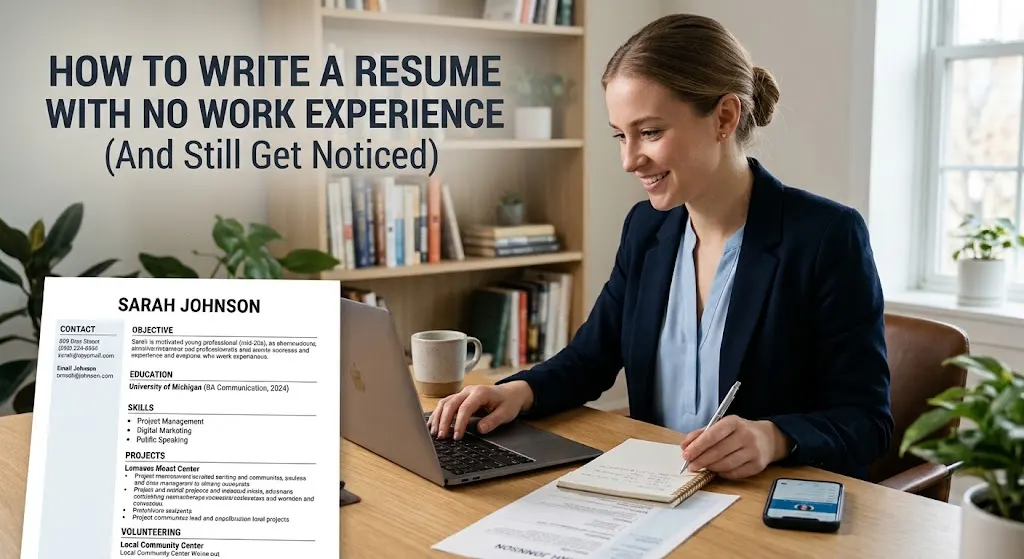
Starting your job search with a blank resume can feel overwhelming — but here’s the truth: everyone starts somewhere, and hiring managers know that. Learning how to write a resume with no work experience is less about faking it and more about presenting what you do have in the smartest way possible.
Start With the Right Tool
Before anything else, you need a platform to build your resume. Microsoft Word is a reliable choice because it comes with pre-built resume templates you can access the moment you open a new document. These templates give you a solid structure from day one — you’re not staring at a blank page.
If Word isn’t available, free alternatives like Google Docs also offer resume templates. The goal is to get a clean, organized starting point and then customize it to fit your situation.
Keep It Clean and Simple
One of the most important rules for any resume — especially one with limited experience — is simplicity. A cluttered resume makes it harder for a recruiter to find what they’re looking for, and that works against you.
Here’s something that might surprise you: the average recruiter spends about six seconds scanning a resume before deciding whether to move forward. That means white space is your friend. A clean, easy-to-read layout helps them spot the right keywords instantly.
Keep your font professional — Times New Roman, Arial, or Calibri all work well. Aim for 11 or 12 point size for body text. Anything smaller looks cramped; anything larger looks like you’re padding for space. Also, never use script or cursive fonts — they’re difficult to read and can get your resume passed over immediately.
Set Up Your Contact Section Correctly
At the top of your resume, place your name prominently, followed by your phone number and email address. You do not need to include your full home address — just the means for them to reach you if they want to schedule an interview.
Make sure your email address looks professional. A handle like yourname@gmail.com is fine. Something informal or outdated sends the wrong signal before they’ve read a single line.
Replace the Objective Section With Keywords
Many resume templates include an “Objective” section near the top. While it’s not harmful, it’s also not the best use of that prime real estate — especially now that many companies use Applicant Tracking Systems (ATS) to screen resumes automatically.
These systems scan your resume for specific keywords before a human ever sees it. So instead of writing a paragraph-long objective that might never get read, use that space to list powerful, relevant keywords related to the role you’re applying for.
Think about it this way: look at several job postings in your target field and notice which words keep appearing. Words like “professional,” “organized,” “detail-oriented,” or job-specific terms like “data entry,” “customer service,” or “administrative support” — these are the terms that help your resume pass the ATS filter and land in front of a real person.
List the Skills You Already Have
You may not have formal work experience, but you almost certainly have transferable skills. Ask yourself: what can I genuinely do well?
Here are some common skills that entry-level employers value:
- Customer service or communication
- Basic computer skills (Microsoft Word, Excel, email)
- Time management and organization
- Data entry or typing speed
- Problem-solving
Even if you picked up these skills casually — through school projects, helping a family member, or managing a personal task — they count. Be honest about your proficiency level, and only include what you can actually back up in an interview.
How to Fill the Experience Section With No Job History
This is the section most people worry about, and understandably so. However, “experience” doesn’t have to mean paid employment. If you’re just out of high school or entering the workforce for the first time, here’s what you can include instead:
Volunteer work is one of the strongest alternatives. Whether you helped organize a school fundraiser, assisted at a community event, or worked with a local nonprofit — these experiences demonstrate initiative and work ethic.
Informal roles count too. Babysitting regularly for neighbors, helping out in a school office, assisting a teacher, or walking dogs for people in your area — these all show reliability and responsibility.
School or extracurricular roles are also worth listing. Were you president of a club? Did you organize an event? Did you help run a bake sale? These demonstrate leadership, coordination, and follow-through.
When describing any of these roles, use bullet points and write in the present tense. Instead of “I helped organize supplies,” write “Organize and maintain office supplies.” It reads as confident and active.
Education Section
List your education in reverse chronological order — most recent first. Include the name of the school and the dates you attended. If you’re still in school, note your expected graduation date.
If you’ve taken any relevant online courses, certifications, or training programs, include those here as well. Even a short course in Microsoft Office or customer service fundamentals shows that you’re proactive about learning.
Showcase Your Soft Skills and Leadership
The final section of your resume is a great place to list soft skills, technology proficiencies, and any leadership roles you’ve held — even informal ones. This is especially valuable when you’re light on formal work history.
For example:
- Proficient in Microsoft Word and Excel
- Typing speed: 55 WPM
- Led peer study groups during senior year
- Organized donation drives for local community events
These details paint a picture of who you are beyond your job history — and for entry-level roles, that matters.
One Last Important Tip: Spellcheck Everything
This may sound obvious, but spelling errors have caused recruiters to set aside otherwise strong resumes. Use the spellcheck built into your word processor, and consider running your final draft through a tool like Grammarly for an extra pass. A polished, error-free resume signals professionalism before you’ve even said a word.
Conclusion
Writing a resume with no work experience is absolutely possible when you know how to frame what you already bring to the table. Focus on clean formatting, keyword optimization, and translating your real-life activities into professional language. The resume is your first impression — make it count.
If you feel like you don’t have enough to fill a resume yet, take that as motivation. Volunteer somewhere, join an organization, help out in your community. The experience will come — and when it does, you’ll be ready to put it on paper the right way.

I cover government jobs, private sector hiring, and
career advice for Pakistani job seekers. With 6 years
of experience following Pakistan’s job market, I write
to help candidates apply smarter and grow faster in
their careers.